 Art Curriculum Intent

As Westleigh artists we can make the imagined real and we can capture and reflect the world around us. We can speak when words might fail, we are brave and bold, are inspired by others, whilst making mistakes through learning new skills. We, as Artists, will express ourselves freely, as equals.
Implementation
Learning is embedded through the development of knowledge and skills over time through overlapping themes. Projects are planned (and marked) holistically across all key stages in order to, whilst following structure, allow for fluidity and change, to reflect the often-non-linear journey of the artist. Confidence is built through a foundation of experiences with a range of media (both 2 and 3 dimensional) which begins in KS3 when we take the students through all key elements of art and design. Throughout KS3 all of these key elements are revisited, whilst accessing different media to ensure a wide range of experiences across Y7/8. This methodology allows for effective differentiation, marking and feedback as well as stretch and ‘mastery’ for more able KS3 students. In both key stage 3 and 4 students will access written tasks, whether recapping practical skills, understanding subject specific terminology or analysing the work of artists. The rationale here is that those students who don’t pursue art at KS4 will still have participated in a wide range of creative experiences and developed both practical and written transferable skills. Our KS4 artists will access activities enabling them to further develop skills at a sophisticated level, providing a ‘tool belt’ of practical applications needed to pursue independent creative lines of enquiries along a loose theme/framework. They will also be encouraged to analyse at a deeper level through extended writing tasks and thorough written reflections to enable them to examine their own practice and identity as ‘the artist’. 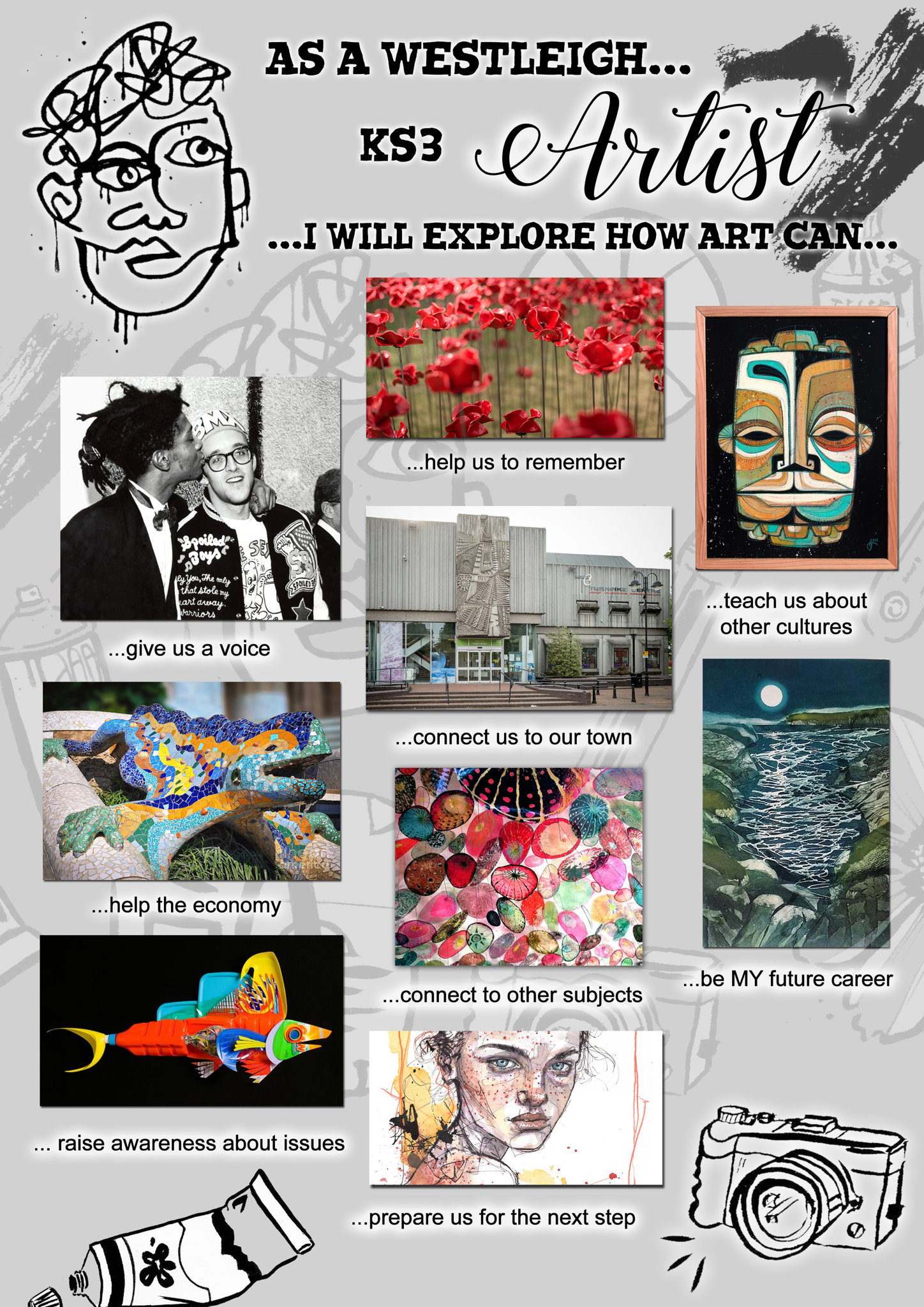
Impact
Within the key stage 3 journey, practical skills will commence using various media, demonstrating technical skills around aspects of drawing, painting, printmaking, mixed media, digital art/manipulation and 3D exploration. Formal elements such as basic colour theory and the principals of mark making, application of tone and the qualities of texture should be understood. Students will have the ability to articulate verbally/in writing and will be empowered to make informed creative choices in order to pursue a successful outcome. Within the key stage 4 journey, practical abilities will be more sophisticated which alongside written work will demonstrate a deeper understanding of their own practice and the work of relevant artists. Students will be able to independently follow a line of enquiry, planning, exploring, preparing and presenting a body of work which presents a range of techniques, styles and approaches.
Learning Journeys
“Give a child a blank piece of paper and some paint and you are asking that child to construct their world” – Bob and Roberta Smith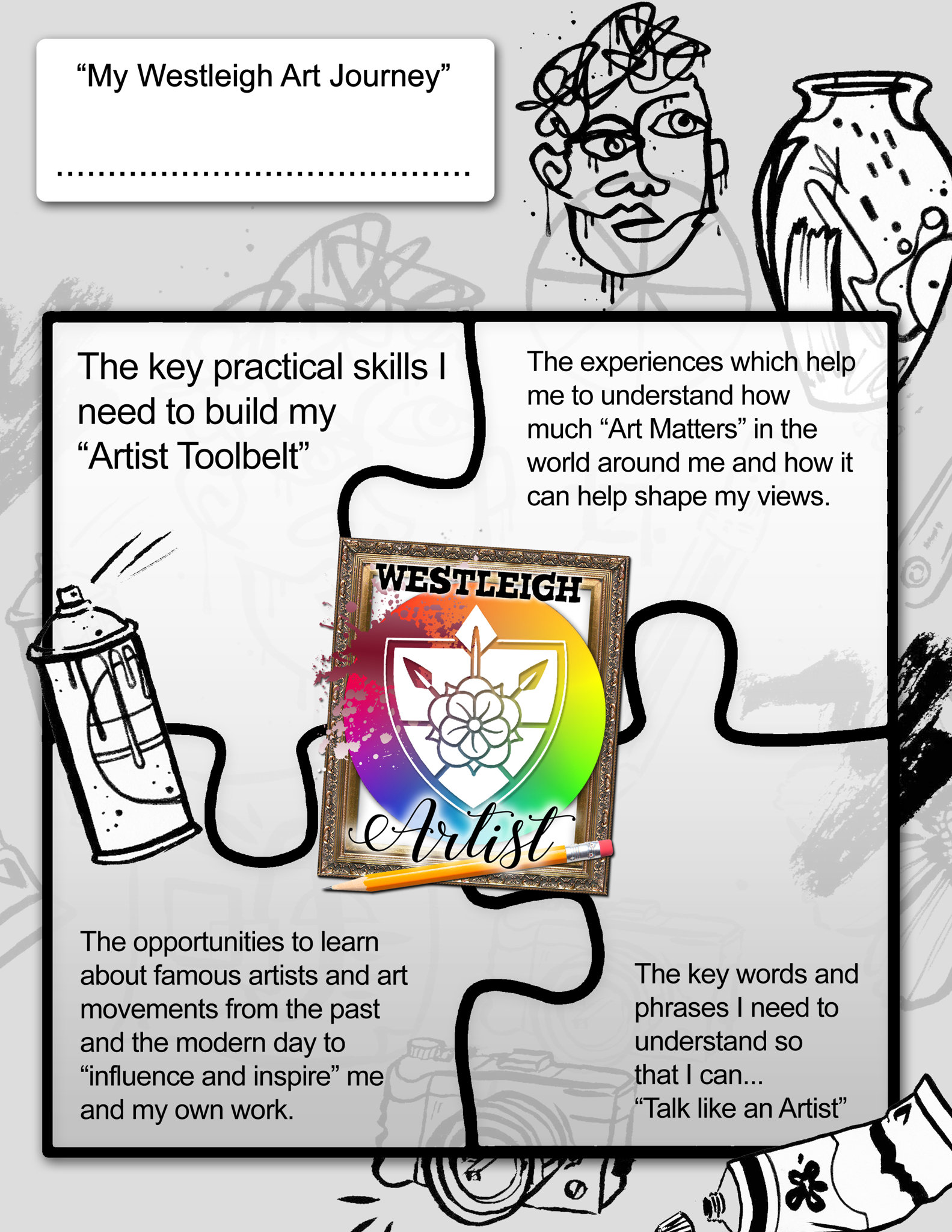 RA.
RA.
Examination Board
The examination board for Art and Photography is AQA.
Click the links for further information:
Student Resources
- Year 7 Art Home Learning Booklet
- Year 8 Art Home Learning Booklet
- Year 9 Art Home Learning Booklet
- Student Support Guide Booklet – GCSE Art and Design
- The Feedback Frame
- Frayer Model
- L.E.A.R.N. Log
- Skills Cards
External Resources
BBC Bitesize – GCSE Art and Design
BBC Bitesize – GCSE Photography
Westleigh Art/Photography Department Pinterest boards
The Tate Gallery – artist search
“The Art Story” – Search for artists, quotes, facts and art movements
“The Art Assignment” – Youtube channel
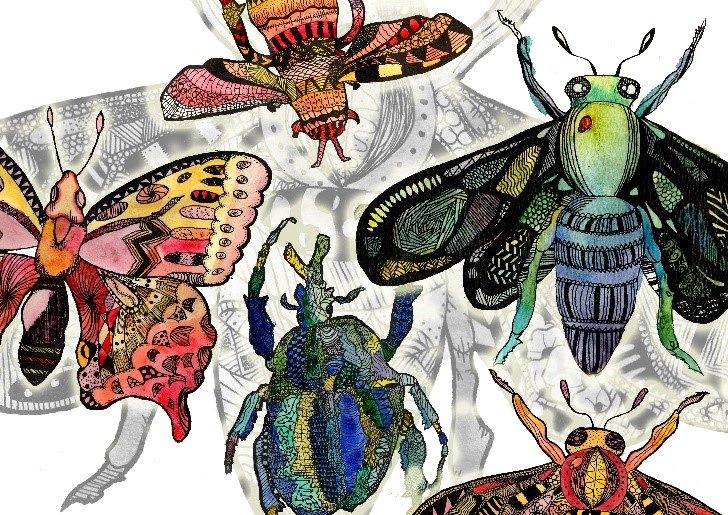
Artwork from former students
Check out the flip book below to see some of the fabulous artwork from former students. Maximise it for an improved view of the work.
.png)
.png)